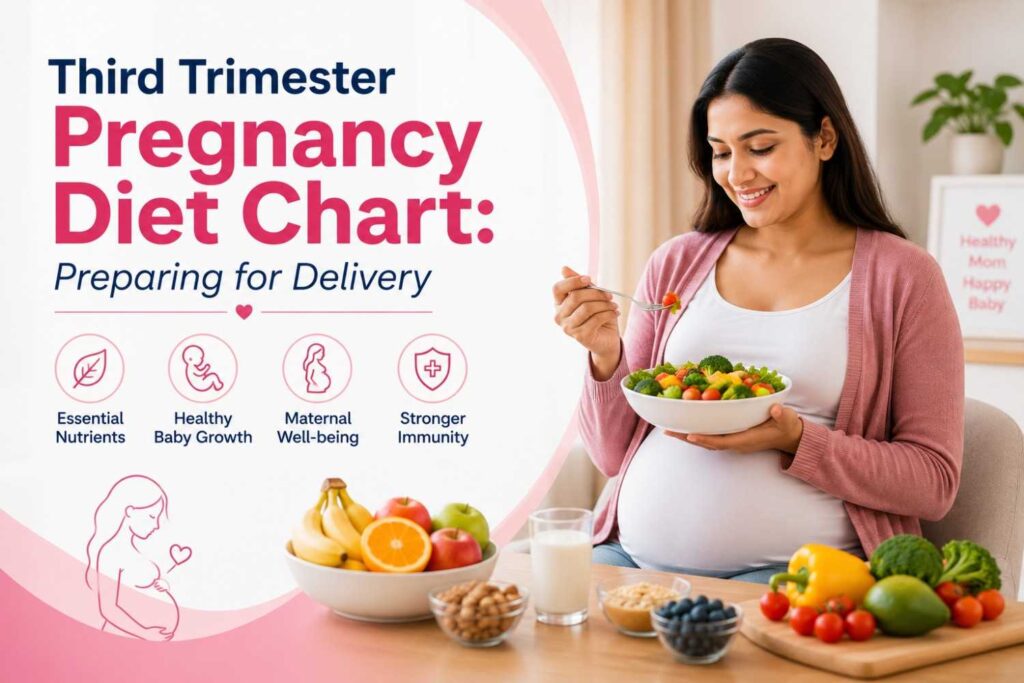
The third trimester (weeks 28–40) is the final stage of pregnancy and one of the most exciting phases for expecting parents. During these weeks, your baby grows rapidly, gains weight, and prepares for life outside the womb. At the same time, your body is getting ready for labor and delivery.
Following a balanced Third Trimester Pregnancy Diet Chart helps provide the energy and nutrients needed to support your baby’s final stages of development while keeping you healthy and prepared for childbirth.
As your due date approaches, eating nutritious meals, staying hydrated, and attending regular antenatal check-ups become even more important.
Why Nutrition Matters in the Third Trimester
During the final months of pregnancy, your baby experiences significant brain development, weight gain, and lung maturation. Your body also requires additional nutrients to support labor, recovery, and breastfeeding preparation.
A healthy third trimester diet can help:
- Support healthy fetal weight gain
- Promote brain and nervous system development
- Strengthen bones and muscles
- Reduce the risk of anemia
- Maintain your energy levels
- Support healthy amniotic fluid levels
- Prepare your body for labor and recovery
Essential Nutrients During the Third Trimester
Protein
Protein supports your baby’s muscle growth and helps repair maternal tissues.
Include:
- Eggs
- Paneer
- Lentils
- Chicken
- Fish (low-mercury varieties)
- Soy products
- Chickpeas
Iron
Iron helps prevent anemia and supports oxygen delivery to both mother and baby.
Good sources include:
- Spinach
- Lentils
- Beans
- Dates
- Beetroot
- Lean meat
- Jaggery (in moderation)
Calcium
Calcium remains essential as your baby’s bones continue to strengthen.
Choose:
- Milk
- Yogurt
- Paneer
- Cheese
- Ragi
- Sesame seeds
Healthy Fats
Healthy fats contribute to brain and eye development.
Include:
- Walnuts
- Almonds
- Flaxseeds
- Chia seeds
- Avocados
Fiber
Constipation and indigestion are common during the third trimester.
Fiber-rich foods such as fruits, vegetables, oats, and whole grains can help maintain healthy digestion.
Sample Third Trimester Pregnancy Diet Chart
| Meal | Recommended Foods |
|---|---|
| Breakfast | Vegetable oats or whole wheat toast with eggs, plus a glass of milk |
| Mid-Morning Snack | Seasonal fruit and a handful of mixed nuts |
| Lunch | Whole wheat chapati, dal, green vegetables, curd, salad, and paneer or grilled chicken |
| Evening Snack | Sprouts or roasted chana with coconut water |
| Dinner | Rice or chapati, dal, mixed vegetables, and a protein source |
| Bedtime | Warm milk with a few soaked almonds |
Eat smaller, frequent meals if you experience heartburn or feel full quickly.
Foods to Eat During the Third Trimester
Prioritize nutrient-dense foods that provide sustained energy and support fetal growth.
Recommended foods include:
- Fresh seasonal fruits
- Green leafy vegetables
- Whole grains
- Dairy products
- Lean proteins
- Nuts and seeds
- Healthy fats
- Plenty of fluids
A colorful, balanced plate helps ensure you receive a wide variety of vitamins and minerals.
Foods to Avoid Before Delivery
To reduce health risks during pregnancy, avoid:
- Raw or undercooked meat
- Raw eggs
- Unpasteurized dairy products
- High-mercury fish
- Alcohol
- Smoking and tobacco
- Excess caffeine
- Highly processed foods
- Sugary beverages
Proper food hygiene is equally important to reduce the risk of infections.
Stay Hydrated
Hydration becomes especially important during the third trimester.
Drink 8–10 glasses of water daily, unless your doctor advises otherwise.
Healthy hydration options include:
- Coconut water
- Buttermilk
- Lemon water
- Homemade soups
- Fresh fruit juices (without added sugar)
Staying hydrated supports circulation, digestion, and healthy amniotic fluid levels.
Healthy Lifestyle Tips Before Delivery
Along with eating well, these habits can help prepare you for childbirth:
- Attend all scheduled antenatal visits.
- Follow your doctor’s advice regarding exercise.
- Practice gentle walking or prenatal yoga if approved.
- Get adequate sleep and rest.
- Continue taking prenatal supplements.
- Monitor your baby’s movements daily.
- Pack your hospital bag before your due date.
When Should You Contact Your Gynecologist?
Seek immediate medical attention if you notice:
- Heavy vaginal bleeding
- Leaking of amniotic fluid
- Severe abdominal pain
- Persistent headaches
- Blurred vision
- Reduced fetal movements
- Regular contractions before your expected due date
- High fever or signs of infection
Prompt medical evaluation can help protect both mother and baby.
Frequently Asked Questions (FAQs)
1. What should I eat during the third trimester?
A balanced diet rich in protein, iron, calcium, healthy fats, fiber, fruits, vegetables, and whole grains is recommended.
2. Can I eat smaller meals more frequently?
Yes. Smaller, frequent meals may help reduce heartburn and improve digestion during the third trimester.
3. Why is protein important before delivery?
Protein supports your baby’s growth while helping prepare your body for labor and postpartum recovery.
4. How much water should I drink?
Most pregnant women should aim for 8–10 glasses of water daily, unless otherwise advised by their healthcare provider.
5. Should I continue prenatal vitamins?
Yes. Continue taking prenatal supplements exactly as prescribed by your gynecologist.
Conclusion
The final months of pregnancy are an important time to nourish both yourself and your growing baby. Following a healthy Third Trimester Pregnancy Diet Chart can help support fetal growth, maintain your energy, and prepare your body for labor and delivery.
Combining a balanced diet with regular antenatal check-ups, adequate hydration, gentle physical activity, and proper rest can contribute to a healthier pregnancy and a smoother childbirth experience. Always consult your gynecologist for personalized dietary advice based on your individual health needs.
Expert Pregnancy Care at Anand Hospital, Amritsar
At Anand Hospital, Amritsar, our dedicated team of obstetricians and gynecologists provides comprehensive pregnancy care from conception to delivery. We offer personalized nutritional guidance, routine antenatal check-ups, high-risk pregnancy management, and compassionate maternity services to help ensure a safe and healthy delivery.
Book your pregnancy consultation today and prepare for motherhood with confidence.