Ovarian cysts are fluid-filled sacs or pockets that develop on or inside an ovary. They are relatively common, particularly during the reproductive years, and many ovarian cysts do not cause symptoms or require treatment. In many cases, they disappear naturally without causing long-term problems.
However, some ovarian cysts can become large, rupture, bleed, twist the ovary, or develop because of an underlying medical condition. This is why understanding ovarian cyst symptoms, causes, types and treatment options is important for women of different age groups.
If you experience persistent pelvic pain, unusual menstrual changes, abdominal swelling, pain during intercourse, or other concerning symptoms, a gynaecological evaluation can help determine the underlying cause.
This guide explains everything you should know about ovarian cysts, including when they may need treatment and when urgent medical care is necessary.
What Is an Ovarian Cyst?
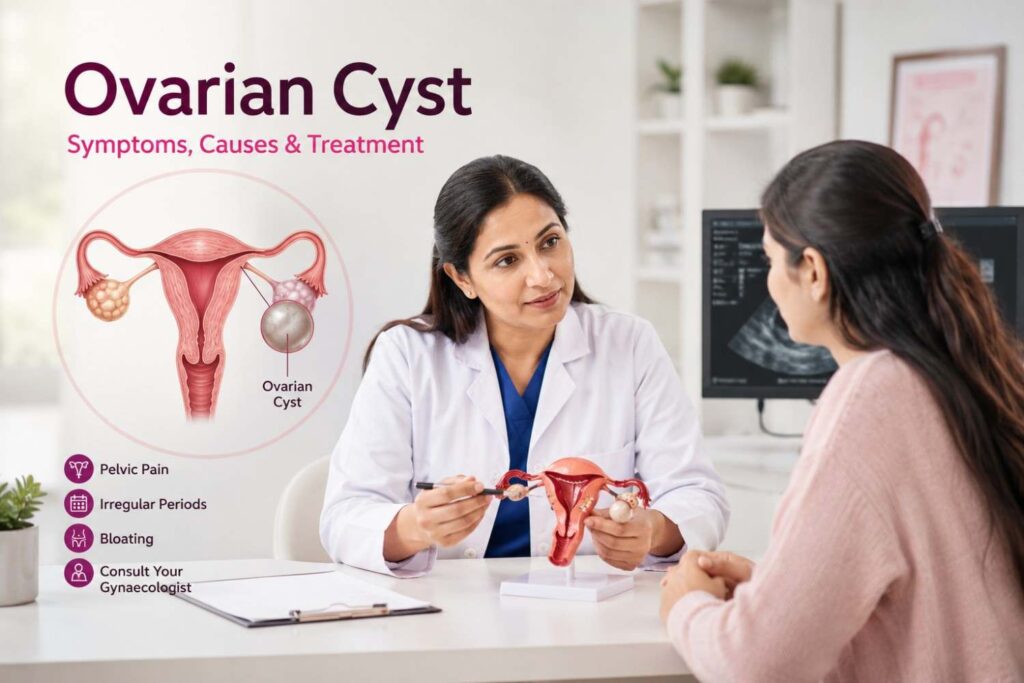
An ovarian cyst is a sac filled with fluid, tissue, or other material that develops in or on an ovary.
Women normally develop small cyst-like structures called follicles during the menstrual cycle. A follicle contains an egg and usually releases the egg during ovulation. Sometimes a follicle continues growing or does not release the egg as expected, resulting in a functional ovarian cyst.
Most ovarian cysts are benign, meaning they are not cancerous. Many are temporary and disappear within a few menstrual cycles.
However, not every ovarian cyst is the same. Some cysts are related to conditions such as endometriosis, while others may require monitoring or treatment depending on their size, appearance, symptoms and the woman’s age.
What Causes Ovarian Cysts?
Several factors can contribute to the development of ovarian cysts.
1. Normal Menstrual Cycle
Functional cysts can develop as part of the normal menstrual cycle. These are among the most common types of ovarian cysts and often resolve on their own.
2. Hormonal Imbalances
Hormonal changes can interfere with normal ovulation and may increase the likelihood of certain types of ovarian cysts.
3. Endometriosis
Endometriosis occurs when tissue similar to the lining of the uterus grows outside the uterus. When this tissue affects the ovaries, it can lead to cysts known as endometriomas.
4. Polycystic Ovary Syndrome
Women with polycystic ovary syndrome (PCOS) may have multiple small ovarian follicles associated with hormonal and ovulatory abnormalities. PCOS is different from having one or two typical ovarian cysts.
5. Pregnancy
Some ovarian cysts can develop or persist during pregnancy. Certain cysts may be related to the early stages of pregnancy and disappear naturally, while others may require monitoring.
6. Abnormal Cell Growth
Some ovarian cysts develop because of abnormal growth of ovarian cells. These may be benign or, less commonly, associated with ovarian cancer.
Types of Ovarian Cysts
Ovarian cysts can be classified into several types.
Functional Cysts
Functional cysts are associated with the menstrual cycle and are generally harmless.
The two common types are:
- Follicular cysts: Occur when a follicle does not rupture and release an egg.
- Corpus luteum cysts: Develop when the follicle releases the egg but seals off and accumulates fluid.
Most functional cysts resolve without treatment.
Dermoid Cysts
Dermoid cysts, also called mature cystic teratomas, develop from cells that can produce different types of tissue. They may contain substances such as hair, fat or other tissue.
They are usually benign but can sometimes become large or cause complications.
Endometriomas
Endometriomas are ovarian cysts associated with endometriosis. They may cause pelvic pain, painful periods and pain during intercourse and can sometimes affect fertility.
Cystadenomas
Cystadenomas develop on the surface of the ovary. They may contain watery or mucus-like material and can sometimes grow quite large.
Other Ovarian Cysts
Some ovarian cysts may be related to other medical conditions or abnormal ovarian growth. Their management depends on their appearance, size, symptoms and other clinical factors.
Ovarian Cyst Symptoms
Many ovarian cysts cause no symptoms and are discovered incidentally during an ultrasound or routine gynaecological examination.
When symptoms occur, they may include:
- Pelvic or lower abdominal pain
- Pain on one side of the abdomen
- Abdominal fullness or pressure
- Bloating
- Feeling full quickly while eating
- Pain during sexual intercourse
- Changes in menstrual periods
- Heavier or lighter periods than usual
- Irregular menstrual bleeding
- Frequent urination if a cyst presses on the bladder
- Difficulty passing stools if a cyst puts pressure on the bowel
- Lower back or thigh discomfort in some cases
The severity of symptoms can vary depending on the size, type and location of the cyst.
Ovarian Cyst Symptoms That Should Not Be Ignored
Persistent or worsening pelvic pain should not automatically be attributed to an ovarian cyst.
Seek medical evaluation if you experience:
- Persistent pelvic pain
- Repeated abdominal swelling or bloating
- Significant menstrual changes
- Pain during intercourse
- Unexplained abdominal or pelvic pressure
- Symptoms that interfere with your daily activities
A proper evaluation is important because similar symptoms can occur with endometriosis, fibroids, pelvic infections, urinary problems and gastrointestinal conditions.
When Can an Ovarian Cyst Become Serious?
Although most ovarian cysts are harmless, complications can occasionally occur.
Ovarian Cyst Rupture
A cyst can sometimes rupture, causing sudden pelvic or abdominal pain. Depending on the situation, internal bleeding may occur.
Ovarian Torsion
A large ovarian cyst can increase the risk of the ovary twisting around its supporting tissues. This is called ovarian torsion and can reduce or stop the blood supply to the ovary.
Symptoms can include:
- Sudden, severe pelvic pain
- Nausea
- Vomiting
- Abdominal tenderness
Sudden severe pelvic pain, especially with nausea or vomiting, requires urgent medical assessment.
Bleeding
Some cysts may bleed internally or rupture and cause significant discomfort.
Cancerous Changes
Most ovarian cysts are benign. However, certain ovarian masses can be associated with cancer, particularly in women after menopause. The risk depends on factors such as age and the cyst’s ultrasound appearance and other clinical findings.
Risk Factors for Ovarian Cysts
Factors that may increase the likelihood of developing certain ovarian cysts include:
- Being of reproductive age
- Hormonal abnormalities
- Pregnancy
- Endometriosis
- PCOS
- Previous ovarian cysts
- Certain fertility treatments
- Some medications that stimulate ovulation
Having an ovarian cyst does not necessarily mean there is a serious underlying problem.
How Are Ovarian Cysts Diagnosed?
Diagnosis usually begins with a medical history and pelvic examination, followed by appropriate investigations.
Pelvic Ultrasound
Ultrasound is one of the most commonly used tests for evaluating ovarian cysts.
It can help determine:
- The size of the cyst
- Its location
- Whether it is fluid-filled or solid
- The thickness of its walls
- Whether there are internal structures
- Whether there is blood flow within certain areas
Depending on the situation, a transvaginal ultrasound may provide more detailed images of the ovaries.
Pregnancy Test
A pregnancy test may be recommended for women of reproductive age when pelvic pain or an ovarian cyst is identified.
Blood Tests
Depending on the patient’s age, symptoms and ultrasound findings, the doctor may recommend certain blood tests. Tumour markers such as CA-125 may sometimes be used as part of an evaluation, particularly when an ovarian mass has concerning features.
Importantly, CA-125 alone cannot diagnose ovarian cancer.
Additional Imaging
In selected cases, doctors may recommend MRI or other imaging tests to obtain additional information about an ovarian mass.
Ovarian Cyst Treatment Options
Treatment depends on several factors, including:
- Type of cyst
- Size of the cyst
- Ultrasound appearance
- Symptoms
- Age
- Menstrual status
- Whether the patient is pregnant
- Whether the cyst is growing or changing
- Fertility considerations
- Suspicion of complications or malignancy
1. Watchful Waiting
Many simple, functional ovarian cysts do not require immediate treatment.
Your doctor may recommend observation and a repeat ultrasound after a specific period to determine whether the cyst has disappeared or changed.
2. Pain Management
If an ovarian cyst causes mild discomfort, the doctor may recommend appropriate pain-relief measures.
However, persistent pain should be evaluated rather than repeatedly treated without identifying its cause.
3. Hormonal Medication
Hormonal contraceptives may sometimes be prescribed to prevent ovulation and reduce the development of new functional cysts.
They generally do not make an existing ovarian cyst disappear immediately.
4. Surgical Treatment
Surgery may be recommended when a cyst:
- Is very large
- Persists or continues to grow
- Causes significant symptoms
- Has a complex or concerning appearance
- Is suspected to have complications
- Does not resolve as expected
- Raises concern about malignancy
The goal is to treat the cyst while preserving healthy ovarian tissue whenever medically appropriate.
When Is Ovarian Cyst Surgery Needed?
Not every ovarian cyst requires surgery.
A gynaecologist may consider surgery when the cyst is persistent, symptomatic, large, complex or associated with complications.
The surgical approach depends on the individual case.
Laparoscopic Ovarian Cystectomy
Laparoscopy is a minimally invasive surgical technique in which small incisions are used to access the abdomen.
When appropriate, laparoscopic cystectomy can remove the cyst while attempting to preserve the healthy portion of the ovary.
Potential advantages may include:
- Smaller incisions
- Less postoperative discomfort
- Shorter hospital stay in many cases
- Faster recovery compared with traditional open surgery
However, the suitability of laparoscopy depends on the cyst’s characteristics and the patient’s overall medical situation.
Open Surgery
In some cases, an open abdominal procedure may be recommended, particularly when the cyst is very large or there is a significant concern about malignancy or other complications.
Your gynaecologist will recommend the safest surgical approach based on the clinical findings.
Can Ovarian Cysts Affect Fertility?
Most ovarian cysts do not permanently affect fertility.
However, certain conditions associated with ovarian cysts can affect conception.
For example, endometriosis can be associated with fertility difficulties. Large or complicated ovarian cysts may also affect ovarian function in some cases.
Surgery can sometimes be beneficial, but ovarian surgery should be carefully planned because removal of ovarian tissue may affect ovarian reserve.
If you are trying to conceive and have an ovarian cyst, discuss your fertility plans with your gynaecologist before starting treatment.
Ovarian Cysts and Pregnancy
Ovarian cysts can sometimes be detected during pregnancy.
Many cysts found in early pregnancy are benign and may disappear as pregnancy progresses. However, larger or complex cysts may require monitoring.
Treatment during pregnancy is considered carefully and depends on factors such as:
- Cyst size
- Ultrasound appearance
- Symptoms
- Gestational age
- Risk of torsion or rupture
- Suspicion of malignancy
If you are pregnant and experience sudden or severe abdominal pain, seek urgent medical attention.
Can Ovarian Cysts Be Prevented?
There is no guaranteed way to prevent all ovarian cysts.
However, regular gynaecological care can help identify ovarian and reproductive health problems early.
If you have a history of recurrent ovarian cysts, your doctor may recommend periodic monitoring or treatment depending on the underlying cause.
Keeping track of your menstrual cycle can also help you identify unusual changes such as irregular bleeding, unusually painful periods or persistent pelvic discomfort.
Frequently Asked Questions
Are ovarian cysts dangerous?
Most ovarian cysts are benign and do not cause serious problems. However, some can rupture, twist the ovary or have features that require further investigation.
What are the most common ovarian cyst symptoms?
Common symptoms can include pelvic pain, abdominal pressure, bloating, menstrual changes and pain during intercourse. Many ovarian cysts, however, cause no symptoms.
Can an ovarian cyst go away on its own?
Yes. Many functional ovarian cysts disappear naturally within a few weeks or menstrual cycles.
Can ovarian cysts cause irregular periods?
Some ovarian cysts and the hormonal conditions associated with them can contribute to changes in menstrual cycles. However, irregular periods can have many different causes.
Can ovarian cysts cause infertility?
Most ovarian cysts do not cause infertility. Conditions such as endometriosis or PCOS may affect fertility and can be associated with ovarian abnormalities.
Do all ovarian cysts require surgery?
No. Many ovarian cysts only require observation and follow-up. Surgery is generally considered when the cyst is persistent, large, symptomatic, complex or potentially concerning.
Is laparoscopic surgery suitable for ovarian cysts?
Laparoscopic surgery may be suitable for selected ovarian cysts. The decision depends on the cyst’s size, type, appearance and the patient’s medical circumstances.
When should I seek emergency medical care?
Seek urgent medical attention if you develop sudden, severe pelvic or abdominal pain, particularly if it is accompanied by nausea, vomiting, dizziness, fainting or significant weakness.
Key Takeaways
- Ovarian cysts are common, particularly during the reproductive years.
- Many ovarian cysts are harmless and disappear without treatment.
- Common ovarian cyst symptoms include pelvic pain, bloating, abdominal pressure and menstrual changes.
- Functional cysts are among the most common types.
- Endometriosis and PCOS can be associated with ovarian abnormalities.
- Ultrasound is commonly used to evaluate an ovarian cyst.
- Treatment depends on the cyst’s size, type, symptoms and other clinical factors.
- Not every ovarian cyst requires surgery.
- Laparoscopic cyst removal may be appropriate for selected patients.
- Sudden severe pelvic pain can indicate a complication and requires urgent medical evaluation.
Conclusion
An ovarian cyst does not always mean something is seriously wrong. In fact, many ovarian cysts are temporary and resolve naturally. However, persistent symptoms, large or complex cysts and sudden severe pain should never be ignored.
Understanding ovarian cyst symptoms, causes and treatment options can help women recognize when professional medical evaluation is needed. A gynaecologist can assess the cyst using medical history, examination, ultrasound and other investigations when required, and recommend an appropriate treatment plan.
If you have persistent pelvic pain, menstrual changes, bloating or have recently been diagnosed with an ovarian cyst, consult a qualified gynaecologist for personalized evaluation and advice.
Book a Gynaecology Consultation at Anand Hospital, Amritsar
If you are experiencing symptoms that may be related to an ovarian cyst or need evaluation of an ovarian cyst diagnosed on ultrasound, consult the gynaecology team at Anand Hospital, Amritsar.
Anand Hospital
Inner Circular Road, Chatiwind, Amritsar
For appointments and further information, contact the hospital directly.