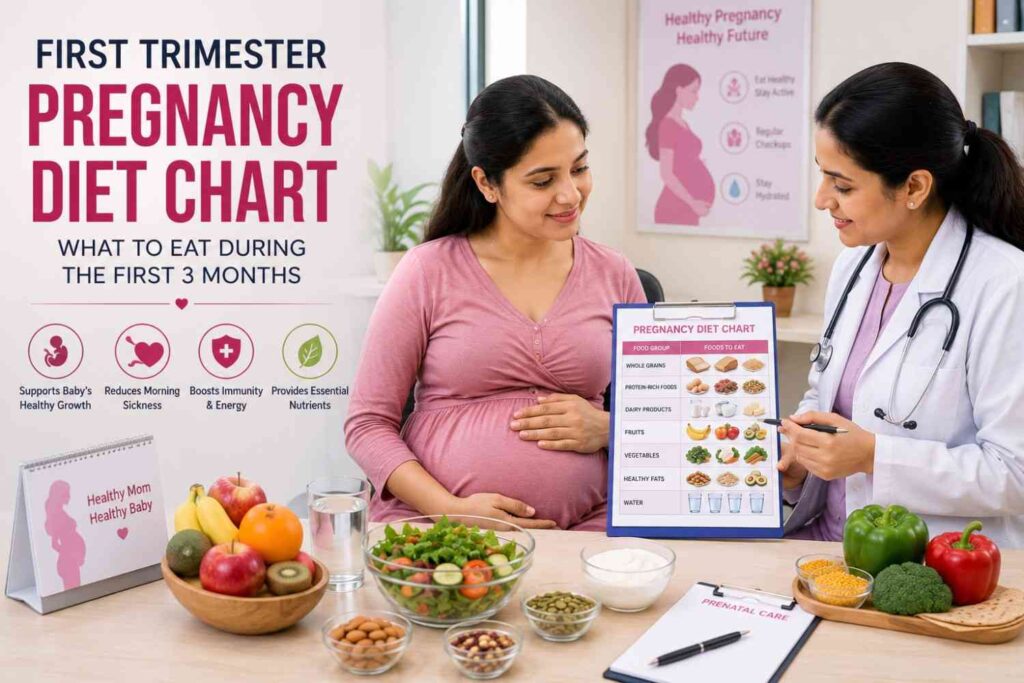
The first trimester (weeks 1–12) is one of the most important stages of pregnancy. During these early weeks, your baby’s brain, heart, spinal cord, and other vital organs begin to develop. Eating a healthy and balanced diet during this period provides the nutrients needed for your baby’s growth while helping you stay healthy.
Many women also experience morning sickness, nausea, and fatigue during the first trimester, making healthy eating a challenge. Following a well-planned First Trimester Pregnancy Diet Chart can help you meet your nutritional needs while easing common pregnancy symptoms.
Why Is Nutrition Important During the First Trimester?
Although your baby is still very small, rapid development is taking place. Proper nutrition during the first three months helps:
- Support healthy fetal growth
- Reduce the risk of birth defects
- Improve energy levels
- Strengthen your immune system
- Promote healthy placenta development
- Prepare your body for the rest of pregnancy
Essential Nutrients During the First Trimester
Folic Acid
Folic acid is one of the most important nutrients during early pregnancy because it helps prevent neural tube defects.
Food Sources:
- Spinach
- Broccoli
- Lentils
- Citrus fruits
- Fortified cereals
Iron
Iron helps produce extra blood to supply oxygen to your growing baby.
Food Sources:
- Green leafy vegetables
- Beans
- Dates
- Lean meat
- Jaggery
Protein
Protein supports the development of your baby’s muscles, tissues, and organs.
Healthy choices include:
- Eggs
- Paneer
- Lentils
- Chickpeas
- Chicken
- Fish (low-mercury varieties)
Calcium
Calcium helps build strong bones and teeth for your baby.
Include:
- Milk
- Yogurt
- Paneer
- Cheese
- Sesame seeds
Stay Hydrated
Drink 8–10 glasses of water daily to stay hydrated and reduce constipation.
You can also include:
- Coconut water
- Lemon water
- Fresh fruit juices (without added sugar)
- Buttermilk
Sample First Trimester Pregnancy Diet Chart
| Meal | Recommended Foods |
|---|---|
| Breakfast | Vegetable oats or poha, one glass of milk, one fruit |
| Mid-Morning Snack | Coconut water and a handful of almonds or walnuts |
| Lunch | Whole wheat chapati, dal, green vegetables, curd, and salad |
| Evening Snack | Seasonal fruit or roasted chana |
| Dinner | Rice or chapati, mixed vegetables, dal, paneer or grilled chicken |
| Bedtime | A glass of warm milk |
Foods to Avoid During the First Trimester
To reduce the risk of infections and pregnancy complications, avoid:
- Raw or undercooked meat
- Raw eggs
- Unpasteurized milk
- High-mercury fish
- Alcohol
- Smoking
- Excess caffeine
- Packaged junk food
- Sugary drinks
Always wash fruits and vegetables thoroughly before eating.
Tips to Manage Morning Sickness
Morning sickness is common during the first trimester. These simple tips may help:
- Eat small, frequent meals.
- Avoid oily and spicy foods if they worsen nausea.
- Stay hydrated throughout the day.
- Keep healthy snacks nearby.
- Avoid skipping breakfast.
- Get enough rest.
If nausea or vomiting becomes severe, consult your gynecologist.
When Should You Consult a Gynecologist?
Seek medical advice if you experience:
- Persistent vomiting
- Vaginal bleeding
- Severe abdominal pain
- High fever
- Signs of dehydration
- Rapid weight loss
Regular antenatal check-ups help monitor both your health and your baby’s development.
Frequently Asked Questions (FAQs)
1. What should I eat during the first trimester?
Focus on foods rich in folic acid, iron, protein, calcium, fruits, vegetables, whole grains, and dairy products.
2. Is it normal to lose appetite during early pregnancy?
Yes. Hormonal changes and morning sickness can reduce appetite. Eating small, frequent meals may help.
3. Can I drink milk during the first trimester?
Yes. Pasteurized milk is an excellent source of calcium and protein.
4. How much water should I drink?
Aim for 8–10 glasses of water daily, unless advised otherwise by your doctor.
5. Should I take pregnancy supplements?
Yes. Most women are advised to take folic acid and other prenatal supplements as prescribed by their gynecologist.
Conclusion
The first three months of pregnancy lay the foundation for your baby’s healthy development. Following a balanced First Trimester Pregnancy Diet Chart that includes nutrient-rich foods, adequate hydration, and prenatal supplements can support both mother and baby during this important stage.
If you have concerns about your diet, morning sickness, or pregnancy health, consult your gynecologist for personalized nutritional guidance.
Expert Pregnancy Care at Anand Hospital, Amritsar
At Anand Hospital, Amritsar, our experienced obstetricians and gynecologists provide comprehensive antenatal care, nutritional counseling, routine pregnancy check-ups, and personalized guidance to support a healthy pregnancy from the very beginning.
Book your pregnancy consultation today and begin your motherhood journey with confidence.