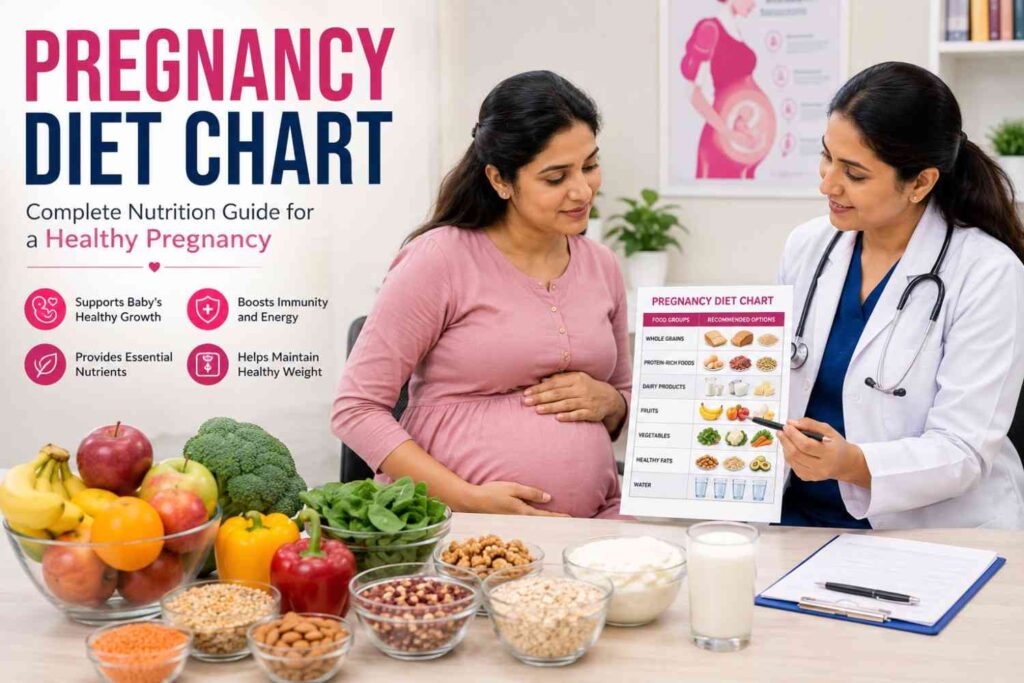
Eating a healthy and balanced diet during pregnancy is one of the most important steps you can take for your own well-being and your baby’s growth. Every meal you eat provides essential nutrients that support fetal development, strengthen your immune system, and prepare your body for childbirth.
However, many expecting mothers have questions such as: What should I eat during pregnancy? Which foods should I avoid? How much nutrition does my baby need?
Following a well-planned pregnancy diet chart can help ensure that both mother and baby receive the nutrients required for a healthy pregnancy.
In this comprehensive guide, we’ll explain the essential nutrients you need, trimester-wise dietary recommendations, foods to include, foods to avoid, and healthy eating tips for every stage of pregnancy.
Why Nutrition Matters During Pregnancy
Your nutritional needs increase during pregnancy because your body is supporting the growth and development of another life.
A healthy pregnancy diet helps:
- Support your baby’s brain development
- Promote healthy bone formation
- Reduce the risk of birth defects
- Maintain healthy maternal weight gain
- Strengthen your immune system
- Reduce pregnancy-related complications
- Improve energy levels
- Support healthy birth weight
Good nutrition also contributes to a smoother pregnancy and may help lower the risk of complications such as anemia, gestational diabetes, and high blood pressure.
Essential Nutrients During Pregnancy
Every nutrient plays a unique role in supporting your baby’s development and your overall health.
1. Folic Acid
Folic acid is one of the most important nutrients before and during early pregnancy.
It helps:
- Prevent neural tube defects
- Support healthy brain development
- Promote healthy spinal cord formation
Food Sources:
- Spinach
- Broccoli
- Lentils
- Citrus fruits
- Fortified cereals
2. Iron
Iron helps your body produce additional blood needed during pregnancy.
Benefits include:
- Preventing anemia
- Supporting oxygen delivery to the baby
- Reducing fatigue
Food Sources:
- Lean meat
- Green leafy vegetables
- Beans
- Dates
- Jaggery
- Spinach
3. Calcium
Calcium supports the development of your baby’s bones and teeth while protecting your own bone health.
Food Sources:
- Milk
- Yogurt
- Cheese
- Ragi
- Almonds
- Sesame seeds
4. Protein
Protein is essential for the growth of fetal tissues and organs.
Include foods such as:
- Eggs
- Chicken
- Fish (low-mercury varieties)
- Paneer
- Lentils
- Soy products
- Chickpeas
5. Omega-3 Fatty Acids
Omega-3 fats support healthy brain and eye development in the baby.
Healthy sources include:
- Walnuts
- Flaxseeds
- Chia seeds
- Low-mercury fish (as advised by your doctor)
6. Vitamin D
Vitamin D helps the body absorb calcium and supports bone health.
Sources include:
- Sunlight exposure
- Fortified milk
- Eggs
- Fatty fish
7. Fiber
Fiber helps reduce constipation, a common concern during pregnancy.
Good sources include:
- Fruits
- Vegetables
- Whole grains
- Oats
- Brown rice
- Beans
Pregnancy Diet Chart by Trimester
Nutritional needs change as pregnancy progresses. Here’s a simple trimester-wise guide.
First Trimester (Weeks 1–12)
During the first trimester, your baby’s major organs begin developing. Morning sickness may make eating difficult, but balanced nutrition remains essential.
Focus On:
- Folic acid
- Protein
- Iron
- Vitamin B6
- Plenty of fluids
Sample Daily Meal Plan
Breakfast
- Vegetable poha or oats
- A glass of milk
- One fruit
Mid-Morning Snack
- Coconut water
- Handful of nuts
Lunch
- Whole wheat chapati
- Dal
- Green vegetable
- Curd
- Salad
Evening Snack
- Fruit
- Roasted chana
Dinner
- Rice
- Dal
- Mixed vegetables
- Paneer or grilled chicken
Second Trimester (Weeks 13–27)
This is a period of rapid fetal growth. Your calorie and protein requirements increase slightly.
Focus on:
- Calcium
- Protein
- Iron
- Vitamin D
- Healthy fats
Continue eating small, balanced meals throughout the day to maintain steady energy levels.
Third Trimester (Weeks 28–Delivery)
Your baby’s weight increases significantly during the final trimester, making nutrition even more important.
Include foods rich in:
- Protein
- Iron
- Calcium
- Fiber
- Healthy carbohydrates
Stay hydrated and avoid skipping meals, especially if you experience heartburn or fatigue.
Foods to Eat During Pregnancy
A healthy pregnancy diet should include a variety of nutrient-rich foods that provide essential vitamins, minerals, protein, healthy fats, and fiber. Eating a balanced diet helps support your baby’s development while maintaining your own health throughout pregnancy.
1. Fresh Fruits
Fruits are packed with vitamins, antioxidants, and natural fiber.
Choose fruits such as:
- Apples
- Bananas
- Oranges
- Pomegranates
- Guava
- Papaya (ripe only, in moderation)
- Kiwi
- Berries
These fruits help improve digestion, strengthen immunity, and provide essential nutrients for fetal growth.
2. Green Leafy Vegetables
Vegetables are excellent sources of iron, calcium, folate, and fiber.
Include:
- Spinach
- Fenugreek (Methi)
- Mustard greens
- Broccoli
- Cabbage
- Bottle gourd
- Carrots
- Beetroot
Aim to include vegetables in both lunch and dinner for balanced nutrition.
3. Whole Grains
Whole grains provide long-lasting energy and support healthy digestion.
Healthy options include:
- Whole wheat chapati
- Brown rice
- Oats
- Quinoa
- Millets (Bajra, Jowar, Ragi)
They also help maintain healthy blood sugar levels.
4. Protein-Rich Foods
Protein is essential for your baby’s muscle, tissue, and organ development.
Healthy protein sources include:
- Eggs
- Paneer
- Lentils (Dal)
- Chickpeas
- Rajma
- Soy products
- Chicken
- Fish (low-mercury varieties)
- Lean meat
Try to include a source of protein with every major meal.
5. Dairy Products
Milk and dairy products provide calcium and protein for healthy bones and teeth.
Choose:
- Milk
- Curd (Yogurt)
- Paneer
- Cheese (pasteurized)
If you are lactose intolerant, ask your doctor about suitable alternatives.
6. Healthy Fats
Healthy fats contribute to your baby’s brain and eye development.
Include:
- Walnuts
- Almonds
- Flaxseeds
- Chia seeds
- Peanuts
- Avocados
- Olive oil (in moderation)
Foods to Avoid During Pregnancy
Certain foods may increase the risk of foodborne illness or affect your baby’s development. Limiting or avoiding these foods is an important part of a healthy pregnancy diet.
Avoid:
- Raw or undercooked meat
- Raw eggs
- Unpasteurized milk and dairy products
- High-mercury fish (such as shark, swordfish, king mackerel)
- Processed and packaged junk food
- Excess sugary foods and drinks
- Excess caffeine
- Alcohol
- Tobacco products
Always wash fruits and vegetables thoroughly before consumption and ensure food is cooked hygienically.
Stay Hydrated During Pregnancy
Hydration is just as important as nutrition.
Drinking enough fluids helps:
- Maintain amniotic fluid levels
- Prevent dehydration
- Reduce constipation
- Improve blood circulation
- Support nutrient transport to your baby
Aim to drink 8–10 glasses of water daily, unless your doctor advises otherwise.
Other healthy hydration options include:
- Coconut water
- Fresh fruit juices (without added sugar)
- Buttermilk
- Lemon water
- Soups
Healthy Lifestyle Tips for a Healthy Pregnancy
A nutritious diet works best when combined with healthy lifestyle habits.
Stay Physically Active
With your doctor’s approval, activities such as walking, prenatal yoga, and light stretching can improve circulation, reduce back pain, and prepare your body for childbirth.
Get Enough Sleep
Aim for 7–9 hours of quality sleep every night. Adequate rest supports your body’s recovery and promotes your baby’s healthy development.
Take Prenatal Supplements
Even with a healthy diet, your doctor may recommend prenatal vitamins such as:
- Folic acid
- Iron
- Calcium
- Vitamin D
Take supplements only as prescribed by your healthcare provider.
Avoid Smoking and Alcohol
Smoking, alcohol, and recreational drugs can increase the risk of pregnancy complications and affect your baby’s development. Avoid them completely throughout pregnancy.
Attend Regular Antenatal Check-ups
Routine pregnancy check-ups help monitor your health and your baby’s growth. Regular visits allow your doctor to detect and manage any concerns early.
Healthy Pregnancy Weight Gain Tips
Weight gain during pregnancy is normal and necessary, but it should occur gradually and under medical guidance.
To support healthy weight gain:
- Eat balanced meals instead of skipping meals.
- Include healthy snacks between meals.
- Avoid overeating or “eating for two.”
- Stay active as advised by your doctor.
- Follow your gynecologist’s recommendations based on your pre-pregnancy weight and overall health.
When Should You Consult a Gynecologist?
Contact your doctor promptly if you experience:
- Persistent vomiting that prevents you from eating or drinking
- Rapid or excessive weight loss
- Severe abdominal pain
- Vaginal bleeding
- High fever
- Swelling of the face or hands
- Reduced fetal movements (later in pregnancy)
- Severe headaches or blurred vision
- Signs of dehydration
Early medical attention can help protect both mother and baby.
Frequently Asked Questions (FAQs)
1. What is the best diet during pregnancy?
A balanced diet that includes fruits, vegetables, whole grains, lean proteins, dairy products, and healthy fats is ideal for supporting a healthy pregnancy.
2. Can I eat fruits every day during pregnancy?
Yes. Fresh fruits provide essential vitamins, minerals, antioxidants, and fiber that benefit both mother and baby.
3. Which foods are rich in iron during pregnancy?
Iron-rich foods include spinach, lentils, beans, lean meat, dates, jaggery, and fortified cereals.
4. How much water should I drink during pregnancy?
Most pregnant women should aim for about 8–10 glasses of water daily, although individual needs may vary.
5. Is coffee safe during pregnancy?
Small amounts of caffeine may be acceptable for some women, but excessive caffeine should be avoided. Follow your doctor’s recommendations.
6. Can I follow a vegetarian diet during pregnancy?
Yes. A well-planned vegetarian diet can provide adequate nutrition when it includes enough protein, iron, calcium, vitamin B12, and other essential nutrients.
7. Do I need prenatal vitamins if I eat healthy?
Yes. Prenatal supplements such as folic acid and iron are commonly recommended even with a balanced diet. Always take them as advised by your doctor.
8. Why are regular pregnancy check-ups important?
Regular antenatal visits help monitor your baby’s growth, assess your health, identify complications early, and ensure timely treatment if needed.
Conclusion
Following a healthy pregnancy diet chart is one of the best ways to support your baby’s growth while maintaining your own health throughout pregnancy. Eating a variety of nutrient-rich foods, staying hydrated, taking prenatal supplements as prescribed, and attending regular antenatal check-ups can contribute to a safer and healthier pregnancy.
Remember that every pregnancy is unique. Your nutritional needs may vary depending on your health, trimester, and any existing medical conditions. Always consult your gynecologist or a qualified healthcare professional before making significant dietary changes.
With the right nutrition and medical guidance, you can give your baby the healthiest possible start in life.
Expert Pregnancy Care at Anand Hospital, Amritsar
At Anand Hospital, Amritsar, we are committed to supporting mothers through every stage of pregnancy with compassionate and comprehensive care. Our experienced obstetricians and gynecologists provide personalized nutritional guidance, routine antenatal care, high-risk pregnancy management, and safe delivery services.
Whether you’re planning your pregnancy or expecting your little one, our team is here to help you enjoy a healthy and confident pregnancy journey.
Book your pregnancy consultation today. Call or WhatsApp Now:
📍 Anand Hospital, Chatiwind Gate Roundabout, Near Gurudwara Shaheeda, Chowk Chabutra, Nimak Mandi, Amritsar, Punjab 143001
📞 Contact Anand Hospital to schedule your appointment.