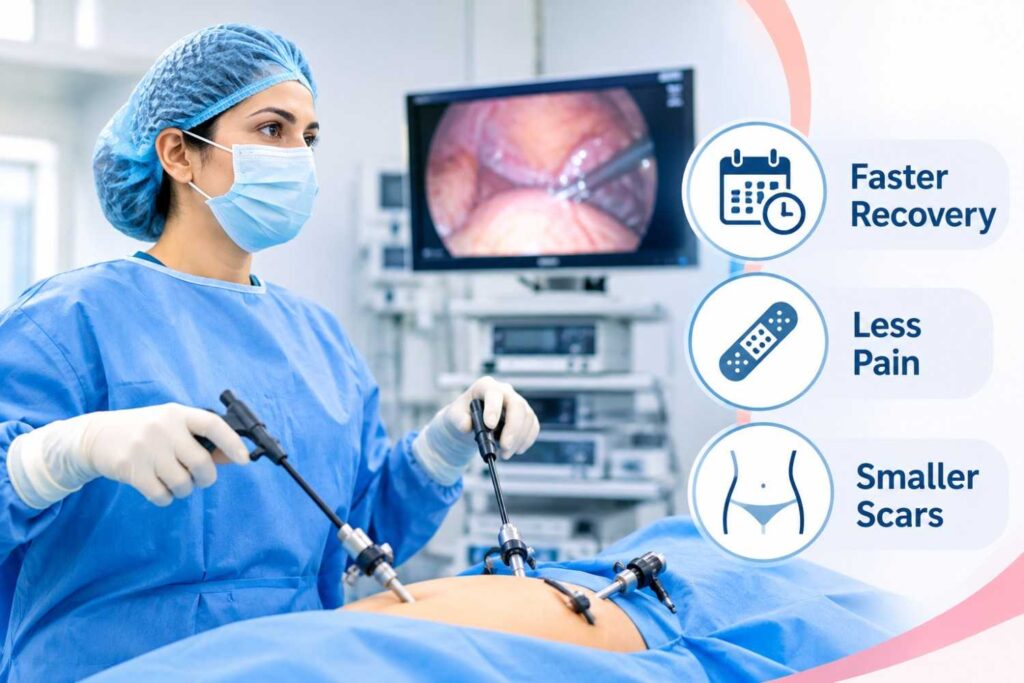
Surgery can be a major concern for patients, especially when they are worried about pain, large surgical cuts, hospital stays, and recovery time. Fortunately, advancements in modern surgical techniques have made many procedures possible through minimally invasive approaches. Understanding the benefits of laparoscopic surgery can help patients make informed decisions when discussing their treatment options with a qualified surgeon.
Laparoscopic surgery, commonly known as keyhole surgery, uses a small camera and specialised instruments inserted through tiny incisions instead of one large surgical opening. This approach is widely used for several abdominal and gynaecological procedures, including fibroid removal, ovarian cyst surgery, endometriosis treatment, and hysterectomy in appropriately selected patients.
For many patients, laparoscopic surgery may offer advantages such as smaller scars, less postoperative pain, shorter hospital stays, and a faster return to everyday activities compared with traditional open surgery. However, its suitability depends on the patient’s medical condition, the complexity of the procedure, and the surgeon’s assessment.
In this article, we explore how laparoscopic surgery works, its major advantages, the conditions it may treat, and what patients should know before choosing this surgical approach.
What Is Laparoscopic Surgery?
Laparoscopic surgery is a minimally invasive surgical technique that allows surgeons to examine and operate on organs inside the abdomen or pelvis through small incisions.
Instead of making a large cut, the surgeon inserts a thin instrument called a laparoscope through a small incision. This instrument has a camera and light source that display magnified images of the internal organs on a monitor.
Additional small incisions may be made to insert specialised surgical instruments that help the surgeon perform the required procedure.
Laparoscopic surgery is commonly performed under general anaesthesia, although the exact anaesthesia plan depends on the procedure and patient’s health.
It is also called:
- Keyhole surgery
- Minimally invasive surgery
- Video-assisted surgery
The main objective is to perform the necessary surgical treatment while reducing the size of the incisions compared with conventional open surgery.
7 Major Benefits of Laparoscopic Surgery
1. Smaller Surgical Incisions and Scars
One of the most noticeable benefits of laparoscopic surgery is the use of smaller incisions.
Traditional open surgery often requires a larger surgical cut to provide access to the affected organ. In laparoscopic procedures, surgeons generally use several small openings to introduce the camera and instruments.
These smaller incisions usually result in smaller scars after healing.
Benefits may include:
- Smaller visible surgical marks.
- Less disruption to the skin and surrounding tissues.
- Smaller wounds to care for.
- Improved cosmetic appearance in many cases.
The number, position, and size of incisions depend on the type of surgery being performed.
2. Less Postoperative Pain
Pain after surgery is a common concern among patients. Because laparoscopic surgery generally uses smaller incisions than open surgery, many patients experience less wound-related discomfort after the procedure.
This may help patients move more comfortably during the initial recovery period.
However, some pain or discomfort is still expected after laparoscopic surgery. Patients may experience abdominal soreness, bloating, or temporary shoulder discomfort due to the gas used during the procedure.
The treating surgeon and medical team provide appropriate pain-management guidance according to the procedure and individual needs.
3. Faster Recovery and Return to Daily Activities
Another important advantage of minimally invasive surgery is the possibility of a quicker recovery compared with certain open procedures.
Smaller incisions and reduced tissue disruption may help patients resume routine activities sooner, depending on the operation performed.
Recovery may involve:
- Gradually increasing walking and movement.
- Returning to light daily activities as advised.
- Following prescribed medicines and wound-care instructions.
- Attending follow-up appointments.
- Avoiding heavy lifting and strenuous exercise until cleared by the surgeon.
The recovery period varies considerably. A minor diagnostic procedure may require less recovery time than a complex laparoscopic hysterectomy or extensive endometriosis surgery.
4. Shorter Hospital Stay in Many Cases
Laparoscopic surgery may allow patients to leave the hospital sooner than they would after comparable open surgery.
Some relatively minor procedures can be performed as day-care surgeries, while more complex procedures may require an overnight stay or longer hospital monitoring.
A shorter hospital stay can offer several practical advantages:
- More time recovering comfortably at home.
- Less disruption to family routines.
- Potentially lower hospitalisation expenses.
- Earlier transition to home-based recovery.
Hospital discharge depends on factors such as pain control, mobility, medical stability, the procedure performed, and the surgeon’s recommendations.
5. Reduced Risk of Certain Wound Complications
Smaller surgical incisions may reduce wound-related complications in selected procedures compared with larger open incisions.
These potential advantages can include:
- Smaller areas requiring wound care.
- Reduced wound-related discomfort.
- Lower risk of certain surgical wound infections.
- Less extensive wound healing requirements.
However, laparoscopic surgery does not eliminate the risk of infection, bleeding, blood clots, or internal organ injury. Proper surgical technique, sterilisation, patient selection, and postoperative care remain essential.
6. Better Visualisation of Internal Organs
Laparoscopic surgery uses a camera that provides magnified images of the internal organs on a monitor.
This allows the surgeon to examine the operating area in detail and use specialised instruments to perform the required procedure.
In gynaecological surgery, laparoscopy may help surgeons assess the uterus, ovaries, fallopian tubes, and surrounding pelvic structures.
It can be useful in selected cases involving:
- Uterine fibroids.
- Ovarian cysts.
- Endometriosis.
- Pelvic adhesions.
- Certain causes of chronic pelvic pain.
- Conditions requiring hysterectomy.
The exact surgical approach depends on the condition, its severity, and the patient’s overall health.
7. Potentially Earlier Return to Work and Normal Routine
For many patients, returning to work and normal activities is an important part of recovery.
Because laparoscopic surgery may involve less tissue disruption than open surgery, some patients can resume their daily routines earlier.
The timing depends on:
- The type and complexity of surgery.
- The patient’s age and general health.
- The presence of other medical conditions.
- The nature of the patient’s work.
- Recovery progress and medical advice.
Patients with physically demanding jobs may need more recovery time than those with less strenuous responsibilities.
Always follow your surgeon’s instructions before returning to work, driving, exercise, or other activities.
Which Conditions Can Be Treated With Laparoscopic Surgery?
Laparoscopy is used for both diagnostic and therapeutic purposes. It may help identify certain conditions and allow treatment during the same procedure when appropriate.
1. Uterine Fibroids
Uterine fibroids are non-cancerous growths that develop in or around the uterus. Depending on their size, number, and location, they may cause heavy menstrual bleeding, pelvic pressure, pain, or fertility-related concerns.
In selected patients, laparoscopic myomectomy may be performed to remove fibroids while preserving the uterus.
2. Ovarian Cysts
Ovarian cysts are fluid-filled sacs that develop on or inside the ovaries. Many cysts resolve without treatment, but some may require further evaluation or surgery.
Laparoscopic ovarian cyst removal may be considered when a cyst causes symptoms, persists, grows, or has concerning features.
The choice of treatment depends on the patient’s age, symptoms, imaging findings, and reproductive plans.
3. Endometriosis
Endometriosis is a condition in which tissue similar to the lining of the uterus grows outside the uterus. It may cause painful periods, pelvic pain, pain during intercourse, and fertility difficulties.
Laparoscopy may be used to diagnose and treat endometriosis in selected patients. Depending on the findings, the surgeon may remove or destroy endometriosis lesions and address associated adhesions.
Treatment should be individualised according to symptoms, disease severity, and fertility goals.
4. Laparoscopic Hysterectomy
A hysterectomy is a surgical procedure to remove the uterus. It may be recommended for certain conditions when other treatments are unsuitable or have not provided adequate relief.
In selected patients, a laparoscopic hysterectomy allows the uterus to be removed using minimally invasive techniques.
The procedure may be considered for conditions such as certain uterine fibroids, persistent abnormal uterine bleeding, adenomyosis, or other appropriate medical indications.
Your gynaecologist will discuss the benefits, risks, alternatives, and implications of the procedure before recommending surgery.
Laparoscopic Surgery vs Open Surgery: What Is the Difference?
Both laparoscopic and open surgery are established surgical approaches. The appropriate method depends on the condition being treated and the patient’s medical requirements.
| Feature | Laparoscopic surgery | Open surgery |
|---|---|---|
| Incisions | Usually several small incisions | Usually one larger incision |
| Scarring | Generally smaller scars | Generally larger scar |
| Postoperative pain | Often less wound-related pain | May involve more wound-related pain |
| Hospital stay | Often shorter for comparable procedures | May be longer |
| Recovery | Often faster for suitable procedures | May require more recovery time |
| Surgical access | Camera and specialised instruments | Direct access through an incision |
| Suitability | Depends on patient and procedure | Appropriate for many complex cases |
Important: These are general comparisons, not guarantees. Some laparoscopic procedures are complex, and open surgery may be safer or more appropriate in certain situations.
What Happens During Laparoscopic Surgery?
Understanding the surgical process can help reduce anxiety and prepare patients for treatment.
Step 1: Preoperative Consultation
The surgeon reviews your medical history, symptoms, previous operations, medications, and relevant investigations.
You may need blood tests, imaging, and an anaesthesia assessment before surgery.
Step 2: Anaesthesia
Laparoscopic surgery is commonly performed under general anaesthesia. The anaesthesia team monitors you throughout the procedure.
Step 3: Small Incisions
The surgeon makes small incisions in the abdomen to introduce the laparoscope and surgical instruments.
Step 4: Camera-Guided Procedure
The abdomen is gently inflated with carbon dioxide gas to provide space and visibility. The surgeon views the internal organs on a monitor and performs the required treatment.
Step 5: Closing the Incisions
After the procedure, the instruments are removed, the gas is released, and the small incisions are closed using appropriate stitches or dressings.
Step 6: Postoperative Monitoring
You are taken to the recovery area, where the medical team monitors your condition and provides appropriate pain relief and postoperative instructions.
Recovery After Laparoscopic Surgery: What to Expect
Recovery depends on the procedure performed and the patient’s individual health.
First 24–48 Hours
Patients may experience:
- Mild abdominal pain or soreness.
- Tiredness following anaesthesia.
- Bloating or temporary shoulder discomfort.
- Tenderness around the incision sites.
Gentle movement may be encouraged according to the medical team’s advice.
First Week
During the initial recovery period, patients should:
- Take prescribed medicines as directed.
- Keep surgical wounds clean and dry according to instructions.
- Walk gently as recommended.
- Avoid heavy lifting.
- Attend scheduled follow-up appointments.
Following Weeks
Gradually, patients may return to their regular routine, depending on the type of procedure and recovery progress.
More complex surgeries, such as laparoscopic hysterectomy, may require several weeks before resuming all normal activities.
Your surgeon will provide an individual recovery plan.
Are There Any Risks or Limitations of Laparoscopic Surgery?
Although laparoscopic surgery offers several advantages, it is still a surgical procedure and carries potential risks.
Possible complications include:
- Bleeding.
- Infection.
- Injury to nearby organs or blood vessels.
- Anaesthesia-related complications.
- Blood clots.
- Hernia at an incision site.
- Complications related to the gas used during surgery.
In some cases, the surgeon may need to convert a laparoscopic procedure into open surgery if it becomes necessary for patient safety.
Not every patient or condition is suitable for laparoscopic treatment. Factors such as previous abdominal operations, extensive adhesions, certain medical conditions, the size or nature of a growth, and the complexity of the disease may influence the surgical approach.
The decision should always be made after an individual medical assessment.
How to Choose the Right Laparoscopic Surgeon in Amritsar?
Choosing the right surgeon is an important step when considering minimally invasive treatment.
If you are looking for a laparoscopic surgeon in Amritsar, consider the following factors:
- Qualifications and experience: Check the surgeon’s medical qualifications and relevant surgical training.
- Procedure-specific expertise: Ask about their experience with the particular laparoscopic procedure you may need.
- Hospital facilities: Consider the availability of appropriate operation theatres, anaesthesia services, and postoperative monitoring.
- Clear communication: Your surgeon should explain the procedure, possible benefits, risks, and alternatives.
- Individualised treatment: The recommended surgical approach should be based on your diagnosis and medical needs.
- Postoperative support: Ask about follow-up appointments, wound care, and recovery guidance.
Do not choose a surgical approach based only on the promise of smaller scars or faster recovery. Patient safety and the effectiveness of treatment should remain the priority.
Laparoscopic Gynaecological Care at Anand Hospital, Amritsar
Anand Hospital, Amritsar, provides healthcare services for patients seeking medical evaluation and treatment for various gynaecological concerns.
For women experiencing conditions such as uterine fibroids, ovarian cysts, endometriosis, or other pelvic health problems, a gynaecological assessment can help determine whether medical management or surgery may be appropriate.
Dr. Harmanpreet Kaur, Gynaecologist and Laparoscopic Surgeon, holds MBBS, MD (Obstetrics & Gynaecology), MRCOG (UK), and MCh (Minimally Invasive Surgery, UK), with more than 13 years of clinical experience in India and the UK.
Patients can discuss their symptoms, diagnosis, available treatment options, and whether a minimally invasive approach is suitable for their condition.
Anand Hospital, Amritsar
Location: Chatiwind Gate Roundabout, near Gurudwara Saheeda, Chowk Chabutra, Nimak Mandi, Amritsar, Punjab 143001.
For gynaecological appointments and laparoscopic surgery enquiries, contact: +91 78377 49294.
Final Thoughts
The benefits of laparoscopic surgery, including smaller incisions, less postoperative pain, shorter hospital stays, and potentially faster recovery, make it an important option in modern surgical care.
It is used for several abdominal and gynaecological conditions, including fibroids, ovarian cysts, endometriosis, and selected cases requiring hysterectomy.
However, laparoscopic surgery is not suitable for every patient. The right treatment depends on the diagnosis, overall health, and complexity of the condition.
If you are experiencing persistent pelvic pain, heavy menstrual bleeding, ovarian cyst-related symptoms, or other gynaecological concerns, consult a qualified gynaecologist to understand your treatment options.
An informed discussion with an experienced surgeon can help you choose an approach that prioritises safety, effective treatment, and recovery.
Frequently Asked Questions (FAQs)
1. What are the main benefits of laparoscopic surgery?
The main benefits may include smaller incisions, smaller scars, less postoperative pain, shorter hospital stays, and faster recovery compared with certain open surgical procedures.
2. Is laparoscopic surgery less painful than open surgery?
Many patients experience less wound-related pain after laparoscopic surgery because the incisions are smaller. However, some discomfort, bloating, and shoulder pain may occur during recovery.
3. How long does it take to recover from laparoscopic surgery?
Recovery depends on the procedure. Some patients return to light activities within a few days, while more complex operations may require several weeks. Your surgeon will provide a personalised recovery timeline.
4. Does laparoscopic surgery leave scars?
Yes, but the scars are generally smaller than those associated with traditional open surgery. Their number and size depend on the procedure performed.
5. Is laparoscopic surgery safe?
Laparoscopic surgery is an established surgical technique, but it carries risks such as bleeding, infection, injury to nearby organs, and anaesthesia-related complications. Your surgeon will assess whether it is appropriate for you.
6. Can uterine fibroids be removed through laparoscopic surgery?
Yes. Laparoscopic myomectomy may be suitable for selected patients who need fibroid removal while preserving the uterus. Suitability depends on fibroid size, number, location, and other medical factors.
7. Can ovarian cysts be removed laparoscopically?
Many ovarian cysts can be removed using laparoscopy when surgery is necessary and the cyst is suitable for this approach. Some cysts may only require monitoring or other treatment.
8. Is laparoscopic surgery used for endometriosis?
Yes. Laparoscopy may be used to diagnose and treat endometriosis, including removing lesions or addressing adhesions in selected patients.
9. Can hysterectomy be performed through laparoscopic surgery?
Yes. Laparoscopic hysterectomy is an option for selected patients. The appropriate approach depends on the underlying condition, uterine size, medical history, and surgeon’s assessment.
10. How can I consult a laparoscopic surgeon in Amritsar?
You can arrange an appointment with a qualified gynaecologist or laparoscopic surgeon at Anand Hospital, Amritsar, to discuss your symptoms and treatment options. Call +91 78377 49294 for appointment enquiries.